
新闻中心
—— NEWS CENTER ——
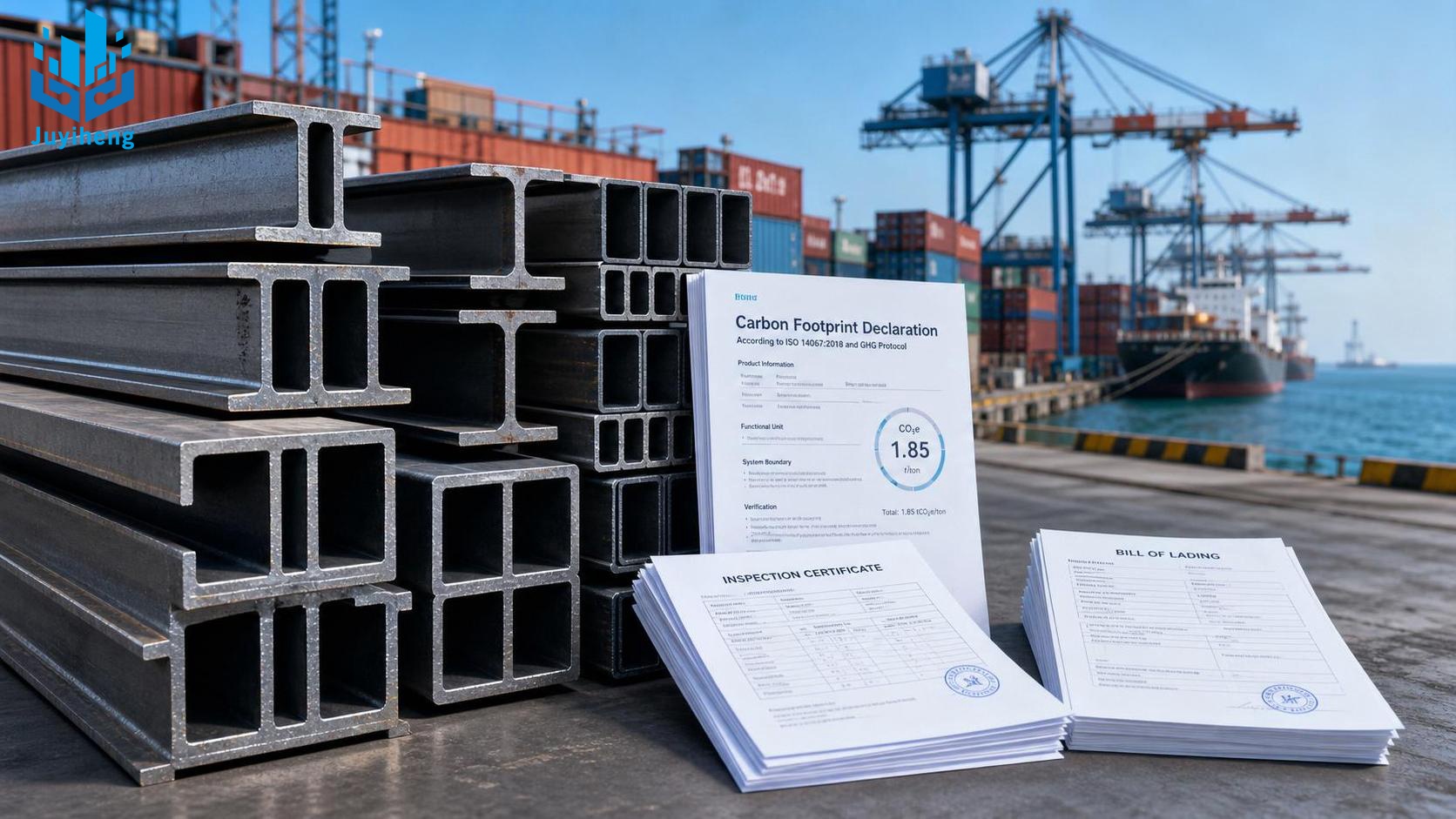
On June 20, 2026, a new customs compliance requirement began to apply on a pilot basis to certain steel exports from Shandong, Jiangsu, and Guangdong. Under the latest notice issued by the General Administration of Customs of China, exporters of 12 categories of sections, including hot-rolled H-beams, I-beams, and square and rectangular tubes, must submit a carbon footprint declaration issued by a CNAS-accredited body and aligned with PAS 2050 or ISO 14067 at the time of customs declaration. This is worth close industry attention because it shifts carbon information from a downstream commercial topic into an export filing requirement, with likely effects on customs timing, buyer documentation checks, and compliance coordination across the steel supply chain.
What the pilot rule now requires
The General Administration of Customs of China issued the pilot notice on June 19, 2026, and the requirement took effect on June 20, 2026. The notice concerns export carbon information filing for selected steel products. The pilot applies in Shandong, Jiangsu, and Guangdong, and covers 12 categories of steel sections, including hot-rolled H-beams, I-beams, and square and rectangular tubes.
For export customs declaration of the covered products, a carbon footprint declaration must be submitted at the same time. The declaration must be issued by a CNAS-accredited institution and must conform to PAS 2050 or ISO 14067. According to the event summary provided, the policy is directed at the broader regulatory trend linked to the extension of EU CBAM-related oversight, and the first batch covers more than 60% of steel export volume to Europe.
Where the pressure is likely to appear first
Export filing moves closer to technical compliance
For exporting companies, the immediate issue is that carbon documentation is no longer only a customer-side request but becomes part of the customs submission process for covered products in the pilot regions. Analysis shows that this may affect shipment preparation, document completeness checks, and handover timing between sales, compliance, and customs teams.
Overseas buyers may tighten document review
For importers and procurement teams overseas, the event summary already points to possible effects on customs clearance timing and compliant sourcing procedures. From an industry perspective, buyers may pay closer attention to whether suppliers can provide carbon footprint declarations that meet the stated accreditation and standard requirements, especially for product categories already covered by the pilot.
Testing and certification service providers gain a more operational role
For certification-related businesses and testing service institutions, the rule connects recognized carbon assessment work directly with export execution. Observably, the key issue is not only whether a declaration can be issued, but whether it can be issued in a form and timeframe that fits customs declaration needs under the pilot arrangement.
Supply chain coordinators face new document dependencies
For freight, customs, and supply chain service providers, the change may add another control point before shipment release. What deserves closer attention is whether covered steel products are correctly identified early in the order and delivery process, because document gaps at filing stage may create timing risks for dispatch and downstream clearance coordination.
What companies should watch in current practice
Check whether the exported products fall inside the pilot scope
Companies should first confirm whether their exported items are among the 12 covered categories and whether the filing port or operating entity falls within the pilot provinces. This is a practical screening step because the rule is product- and location-specific in the information provided.
Review the readiness of carbon footprint documents
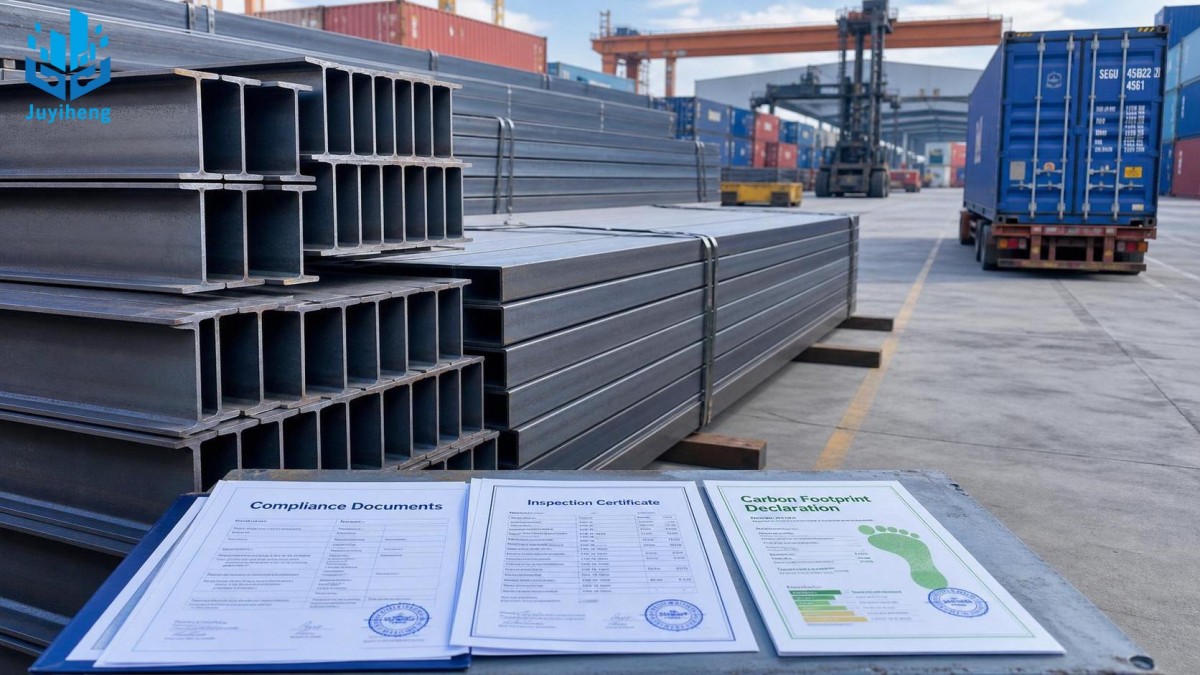
Analysis shows that exporters and suppliers should pay attention to whether their carbon footprint declaration can be issued by a CNAS-accredited body and whether the supporting work is aligned with PAS 2050 or ISO 14067. The current input does not provide more detailed execution criteria, so it is more appropriate to treat document readiness as a compliance checkpoint that still requires continued verification.
Reassess lead times in contracts and shipment planning
Because the declaration must be submitted together with the export customs filing, businesses should watch for possible effects on booking schedules, internal review cycles, and delivery promises. This does not confirm delay as a fixed outcome, but it does indicate that carbon-related documentation may become a practical determinant of shipment timing for covered goods.
Watch procurement and bid documents for wording changes
From an industry perspective, another point to monitor is whether buyers, traders, and project procurement teams begin to reflect this customs-side requirement in sourcing documents, technical submission packages, or supplier qualification checks. The event summary supports attention to procurement process changes, but not a conclusion that uniform market practice has already formed.
How this signal should be read for now
Analysis shows that this development is more than a general policy statement because it is tied to customs declaration practice from a specific effective date and within a defined pilot scope. At the same time, it is not yet appropriate to read it as a fully settled market-wide standard for all steel exports. It is more appropriate to understand this as an execution signal with immediate relevance for covered products and regions, while the detailed operating approach, market response, and consistency of implementation still merit close observation.
Observably, the rule also indicates that carbon data is moving closer to the transaction and clearance layer of trade compliance. That matters for the industry because once carbon-related requirements affect filing and delivery workflows, commercial, technical, and compliance functions can no longer treat them as separate issues.
Why the market should stay measured
The immediate significance of this update lies in the fact that export carbon information has been linked to customs filing for specified steel products in a pilot framework. For exporters, buyers, and service providers, the practical issue is not only policy awareness but whether documentation, review procedures, and delivery coordination can keep pace with the new requirement.
A balanced reading is that this is an implemented change within a defined pilot scope and, at the same time, a regulatory signal that still needs follow-up observation. Current attention is best placed on covered product identification, declaration readiness, customs filing coordination, and any further clarification in implementation practice.
Basis of this article and what still needs verification
This article is generated based on the user-provided news title, event date, and event summary. For events of this type, commonly relevant source categories include official notices, publications by regulatory authorities, customs or trade administration releases, industry association information, standard organization documents, and reporting by authoritative media.
No specific official source link was provided in the input, so the exact official link remains to be verified on an ongoing basis. Further observation is still needed regarding detailed implementation wording, certification execution criteria, customs filing interpretation, procurement document changes, industry feedback, and how affected companies carry out compliance in practice.
Please give us a message
SHANDONG JUYIHENG NEW MATERIALS CO., LTD.