
新闻中心
—— NEWS CENTER ——

On July 3, 2026, the U.S. Department of Commerce released preliminary anti-dumping duty determinations on steel structural shapes imported from China, covering products such as H-beams, channels, and angles. Beyond the duty range itself, the development signals a more immediate tightening in trade execution: exporters not covered by separate rate applications are directly targeted, while all shipments must carry stricter origin documentation and mill certification. For overseas distributors, importers, and supply-chain participants sourcing from Chinese mills, including cargo routed through Qingdao and Tianjin ports, this is worth close attention because the change reaches beyond pricing into documentation control, delivery timing, and compliance handling.
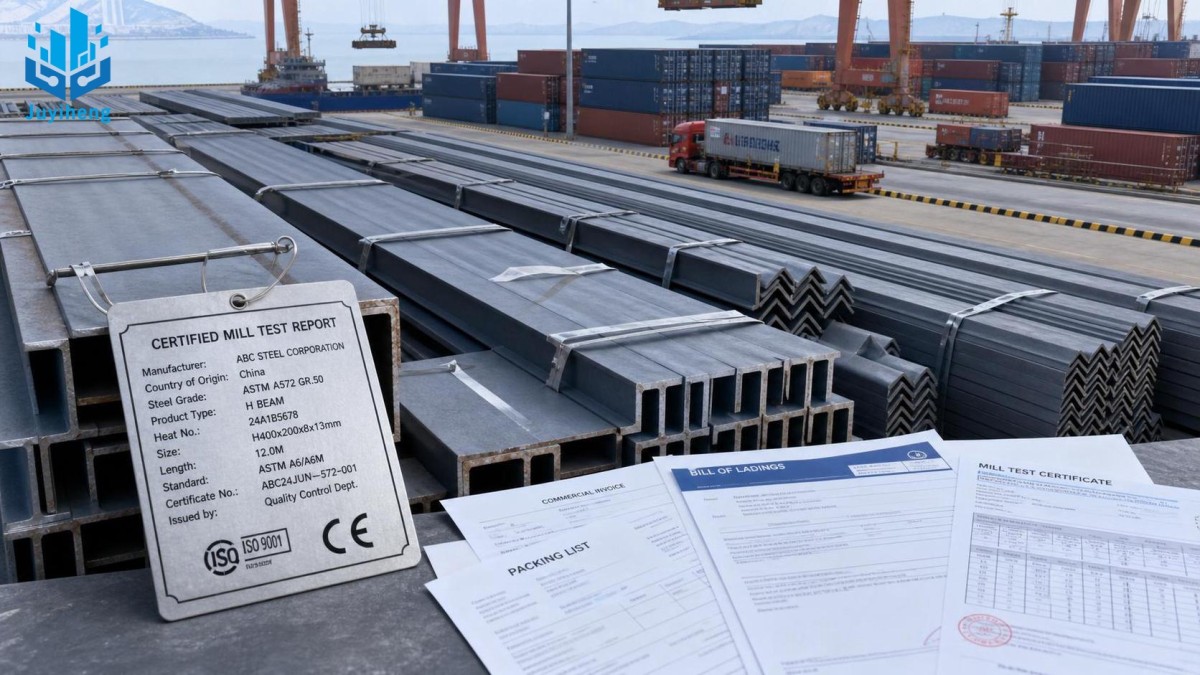
What the preliminary ruling confirms
The confirmed facts are limited but commercially significant. The U.S. Department of Commerce has issued preliminary anti-dumping duty determinations ranging from 24% to 78.3% on imported steel structural shapes from China, with effect from July 3, 2026. The products referenced include H-beams, channels, and angles.
The ruling applies to exporters not covered by separate rate applications. It also requires strict origin documentation and mill certification for all shipments. According to the provided event summary, the direct areas affected are pricing, lead time, and compliance requirements for overseas distributors and importers buying from Chinese mills, including shipments associated with Qingdao and Tianjin ports.
Where the pressure is likely to appear first
Importers and overseas distributors face immediate transaction adjustments
From an industry perspective, these market participants are the first to feel the operational effect because they sit at the point where customs treatment, landed cost, and document completeness converge. The rule change matters not only because of the preliminary duty range, but because shipments now depend more heavily on origin records and mill certification being aligned and review-ready.
What deserves closer attention is the shift in the import process itself: quotation validity, cost assumptions, shipment release planning, and document review may all require tighter internal checks. Even where supply remains available, the transaction burden becomes heavier when paperwork quality directly affects compliance handling.
Export-side suppliers and trading companies must pay closer attention to documentation status
Analysis shows that exporters and intermediaries connected to Chinese mills may see greater scrutiny around whether they are covered by separate rate applications and whether shipment files can support origin claims in a consistent way. For these businesses, the main issue is not only pricing competitiveness, but whether commercial documents, production records, and mill certificates can stand together without gaps.
In practical terms, export coordination may become more document-sensitive at the order confirmation, booking, and pre-shipment stages. Where documentation trails are incomplete or inconsistent, the commercial impact may extend into delivery timing and buyer confidence.
Procurement and project-facing buyers may need to reassess delivery assumptions
Buyers using steel structural shapes in projects or downstream processing may be affected through procurement timing and sourcing predictability. The provided information already points to lead-time pressure, which means purchasing teams should not read this only as a tariff issue. It also touches the dependability of shipment scheduling and the acceptability of supporting certificates.
For this group, the relevant business link is the interface between procurement planning and compliance readiness. Where imported structural shapes are tied to fixed delivery milestones, any additional documentation review or shipment handling friction could become commercially relevant.
Supply-chain service providers may encounter tighter document coordination demands
Observably, logistics and trade-support participants involved in shipments through ports such as Qingdao and Tianjin may need to manage more careful handoffs of origin records and mill certificates. The event summary does not provide execution details beyond that requirement, so no further conclusion should be treated as confirmed fact. Still, the direction is clear enough to suggest closer alignment between exporters, forwarders, brokers, and import-side compliance teams.
What companies should monitor now
Review whether shipment files can support origin and mill verification
Analysis shows that the most immediate practical issue is document integrity. Companies involved in affected shipments should pay close attention to whether origin documentation and mill certification are complete, internally consistent, and aligned with the goods being shipped. This is especially relevant for businesses handling multiple suppliers or mixed documentation flows.
Recheck pricing and contract assumptions against the preliminary duty range
The preliminary anti-dumping duty range of 24% to 78.3% creates a direct need to revisit quotations, margin assumptions, and landed-cost calculations. This should be understood as a current trade execution issue rather than only a market sentiment issue. For importers and distributors, the practical question is whether existing commercial terms still reflect the latest duty exposure and related compliance burden.
Track lead-time exposure in parallel with compliance review
What deserves closer attention is that timing risk may come from both commercial repricing and document handling. Companies should therefore watch not only freight or production timing, but also whether document review requirements create additional processing steps before shipment acceptance or delivery release. The provided information confirms lead-time impact, but not the exact operational sequence, so businesses should treat this as an area requiring active monitoring rather than a settled execution pattern.
Watch for later clarification in implementation language and market practice
Because this is a preliminary determination, it is more appropriate to understand the current development as an active compliance and trade signal with immediate effect, while also recognizing that market participants will be watching how execution language, buyer requirements, and transaction practice evolve. Companies should pay particular attention to future official wording, customer document requests, and any changes in tender or purchasing documentation linked to affected steel structural shapes.
Why this matters beyond the headline duty rate
Analysis shows that this development should not be read only as a pricing event. The stronger signal is that trade access for the affected product category is becoming more documentation-dependent and more sensitive to exporter status. That changes how market participants evaluate suppliers, prepare shipment files, and manage delivery commitments.
Observably, the event is best understood as both an already effective rule change and a broader execution signal. The duty determination is in force from the stated date, but the full commercial meaning will depend on how consistently documentation requirements are applied in practice and how import-side buyers respond in their sourcing decisions.
How the market should read the current stage
At this stage, the development is best understood as a concrete compliance and trade adjustment rather than a standalone news item. The confirmed changes already affect duty exposure, origin documentation, mill certification, and expected lead time. At the same time, the broader market response still requires observation, particularly in how importers, distributors, and suppliers revise procurement arrangements and document standards.
A neutral reading is that the ruling has immediate operational relevance, but its wider market effect should be assessed through ongoing execution, buyer reactions, and follow-on regulatory clarification rather than assumed in advance.
Basis of this article and what still needs verification
This article is generated solely from the user-provided news title, event date, and event summary. The analysis is limited to the confirmed information that the U.S. Department of Commerce issued preliminary anti-dumping duty determinations on Chinese steel structural shapes effective July 3, 2026, with stricter origin documentation and mill certification requirements and direct implications for pricing, lead time, and compliance.
For events of this kind, commonly relevant source types may include official notices, releases from regulatory authorities, customs or trade administration information, industry association updates, standard-setting documents, and reporting by authoritative media. No specific official source link was provided in the input, so the underlying official publication path still needs continued verification.
What should continue to be monitored includes any later policy detail, implementation wording, certification and documentation practice, changes in tender or procurement files, industry feedback, and how affected companies actually execute compliance requirements in live transactions.
Please give us a message
SHANDONG JUYIHENG NEW MATERIALS CO., LTD.