
新闻中心
—— NEWS CENTER ——

On June 24, 2026, the joint restart of steel product export licenses by the National Railway Administration and the Ministry of Commerce has become a point of attention for overseas buyers, suppliers, and project-linked steel users. For transactions involving hot-rolled coil, H-beams, and galvanized profiles, the key issue is now not only shipment timing, but also whether the export documents can clear customs smoothly.
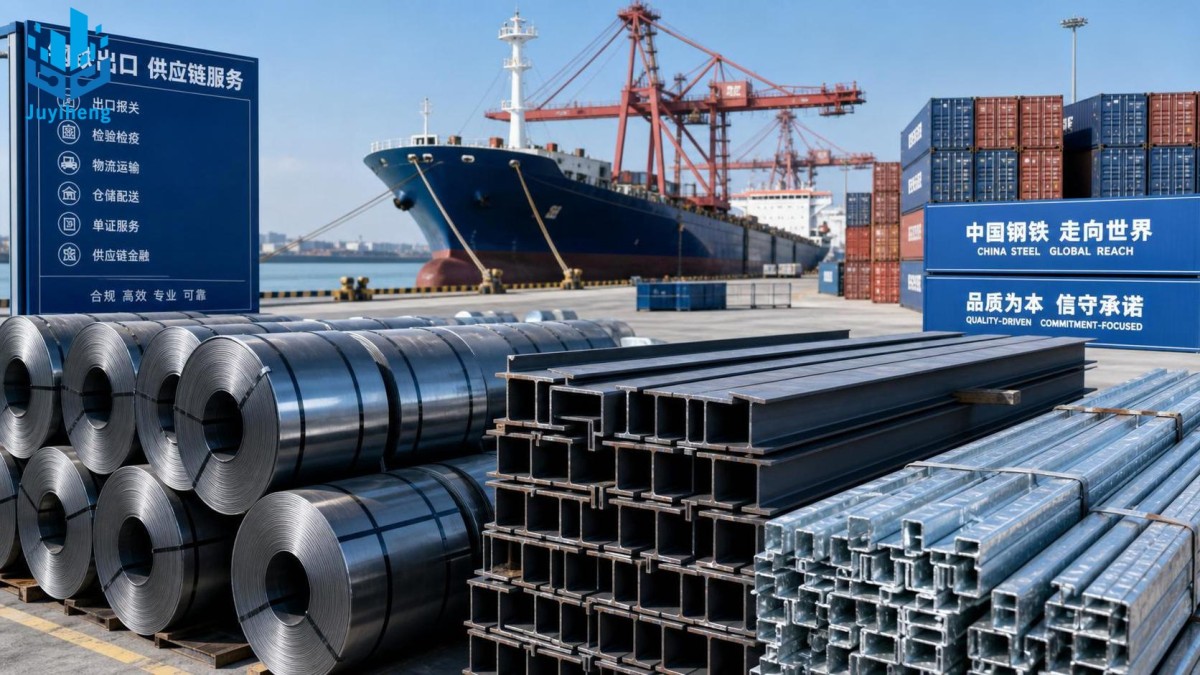
License controls return for selected engineering steel products
The steel product export licensing system was formally restarted on June 24, 2026. The first batch covers engineering steel products such as hot-rolled coil, H-beams, and galvanized profiles. According to the information provided, the move is intended to align with the regulatory requirements of the first year of national carbon market compliance and to support dual control over export volume and quality.
For overseas importers, the immediate practical change is that they need to obtain a valid license number from their Chinese suppliers in advance in order to complete customs clearance. Goods without the required license may be refused at the port.
What this means across the trade chain
Transaction timing and document readiness are now linked
Direct traders are likely to feel the impact first, because the licensing requirement adds a document verification step before shipment can be completed. The main change is in order execution, customs handover, and pre-shipment communication, where missing or delayed license information can directly affect clearance.
Project users may face tighter delivery coordination
For downstream project users and engineering-related buyers, the focus shifts to whether the supplier can provide compliant export documents on schedule. If the product falls within the covered categories, delivery planning now needs to leave room for license confirmation and document matching.
Supply chain service providers must check consistency earlier
Logistics and customs-related service providers may need to pay closer attention to document consistency, especially the alignment between product category, license information, and shipment details. The practical risk is not about market demand alone, but about whether the cargo can pass the port review process.
What companies should watch next
Confirm whether the product falls within the covered scope
Companies should first verify whether their steel products are among the categories named in the licensing restart, especially hot-rolled coil, H-beams, and galvanized profiles. This step matters because the compliance path may differ by product type.
Ask for license details before shipment planning
Overseas buyers should request the valid license number from Chinese suppliers before customs arrangements are finalized. The key point is that license information is not a post-shipment formality; it is part of the clearance process itself.
Separate policy signal from immediate business effect
The policy move should be read as a concrete compliance step, but it is still better understood through its operational impact on export documentation and port clearance. At this stage, the more important question is how quickly companies can adapt their internal communication and order confirmation流程 rather than assuming a broader market shift.
How to read this signal now
Analysis shows that this is not just a paperwork update. It signals a tighter export management framework for selected steel products, while also reminding market participants that compliance requirements can directly affect delivery certainty. For now, it is best understood as an immediate operational rule change with possible wider implications that still need continued observation.
Source basis and follow-up
This article is generated based on the user-provided title, event date, and event summary. Related source types for this kind of information typically include official notices, enterprise announcements, industry association updates, authoritative media reports, and standard-setting or regulatory documents. A specific official source link was not provided in the input, so it should continue to be verified against subsequent official disclosures and related implementation details.
Please give us a message
SHANDONG JUYIHENG NEW MATERIALS CO., LTD.